


Rooted in Rural: People Spotlight – Natalie Hughes
2 weeks ago • 1 min read
‘Rooted in Rural’ People Spotlight series with Natalie Hughes, Head of HSEQ at Viberoptix
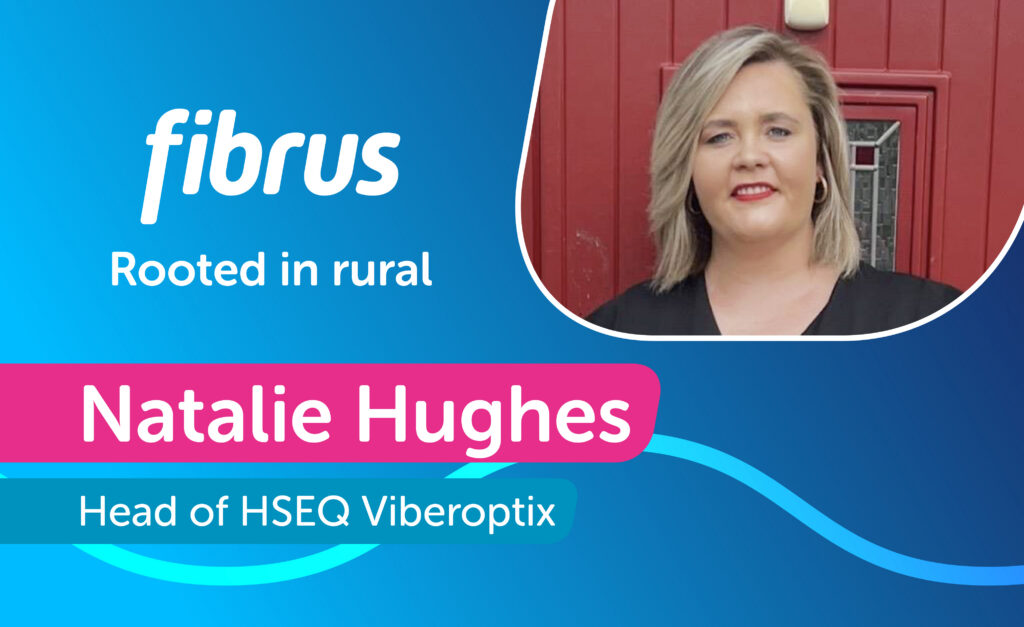
At Fibrus, we’ve always been proud that our company is powered by rural people. Our colleagues are the heart of what we do, and many of them live, work, and thrive in the very communities we serve.
To celebrate this, we’re running a ‘Rooted in Rural’ People Spotlight series, a chance to shine a light on the incredible stories of our rural colleagues who help make Fibrus what it is today.
This month, we’re spotlighting Natalie Hughes Head of HSEQ at Viberoptix, part of Fibrus Group.
- Where are you from? Tell us a bit about your hometown or where you live now, what makes your area special to you?
Originally from Manchester and relocated to Coalisland 26 years ago. Big differences between the city and town dynamics. For example, everyone knew everyone in Coalisland, who was related to who and how whereas in Manchester, you are lucky to know who your next-door neighbor is. My first memories of Coalisland were the smell of the open fires and burning turf in the air. It brings a lot of memories of my Grandparents and their house where we used to come and stay during holidays.
Now, I live in Ballinderry, Co. Tyrone in a detached house with round top garage on an acre plot. There is plenty of room for the 4 children, the dog and the cat to run around in and enough space to work on the many projects we have planned. I have never lived in a rural setting before, and I have no intention of moving anytime soon. It always feels very tranquil. I really enjoy being out in the garden either working or relaxing during the summer months or enjoying the falling snow nice and cozy in front of the open fire.
- What makes you most proud of your rural area? Are there any local initiatives, community groups in your rural community, environmental aspects
I have recently joined a local women’s only (non-membership) gym which have a lot of very friendly local women and some that travel from Clonoe and Pomeroy. The two ladies who run the gym are wonderful. They put in so much care and attention to each and every person that walks through their door and it has been a fantastic way to meet local people.
Clean air and quiet – no light pollution at night
- I understand you live in a primarily rural area, and have built a green house where you can grow your own produce as well as having recently learning to drive a tractor. Is becoming resourceful important to you living in a rural area?
It’s not that being resourceful is important, its more that I enjoy just doing it. I like being able to say that I have attempted and can do something that would be out of the usual comfort zone or that I haven’t tried before. Since moving here, I have shuttered concrete, helped build a green house and vegetable beds, grow and tend to vegetables, developed a wild flower patch, helped build a swing/slide set for the children, drive the tractor, chop wood for the fire, help build ‘built in wardrobes’, build fences. I really enjoy getting in stuck in to some labour and at times I think it helps with my role in health and safety as it can give a bit more understand of the challenges that those at the front line may deal with.
In the green house and vegetable beds, I have been growing cucumbers, tomatoes, peppers, chillis, carrots, leek, onions, spinach, lettuce, broccoli, beetroot, radishes, chives, basil and parsley. I decided on growing vegetables as I love to cook homemade and nutritious meals from scratch. It’s so satisfying being able to serve meals with the produce grown from my own garden with the taste and quality being so much better compared to store bought. This is only my second season of growing vegetables and still so much to learn – I have quiet mastered the art of it yet.
- What’s one thing you think people misunderstand or overlook about rural life?
Convenience – you can live the town and not need a car as you can walk to the shop or access the public transport. We must use the car for all travel whether it is for the grocery shop or a visit to the doctor or chemist. Planning a night out can be difficult as it is very difficult to get taxi’s who are willing to travel from Cookstown (for example) to Ballinderry. If I wanted to arrange a night out further away such as Belfast, I would have to include a B&B or hotel in the arrangement as there is no local park and rides or taxis from there available.
I also must drive my children to school because there is no direct bus route to their schools.
- What challenges have you previously faced working remotely in rural areas, and how have you overcome them? E.g poor internet connection, communication, travel for work
The only challenge that I can think of is mobile connectivity. My currect wifi provider is BT and there has been no issue with them apart from they are extremely expensive. I am with O2 for my personal mobile and Vodafone on my work phone and both connections are very poor in this location. Can not rely on being able to maintain a conversation over the phone because of this.
- Why do you think it’s important to invest in and connect rural communities?
Investing in and connecting rural communities is important because it creates equal opportunities, particularly by enabling remote working and promoting inclusiveness between rural and urban areas. It also supports the development of small rural schools, ensuring they have the same access to resources and opportunities as larger urban schools.
Improving infrastructure is essential for essential services such as doctor surgeries and chemists, which are often limited to one facility serving multiple villages like Drummullen, Coagh, Ballinderry, and Ardboe, and are already struggling to cope with growing populations. Strengthening rural connectivity also helps ensure better inclusion and support for vulnerable people, including those who are sick or ageing.
Finally, better investment in rural areas can improve public transport, making it easier for people to access schools, services, and social activities, which in turn enhances overall quality of life.
- What changes or opportunities do you see ahead for rural communities?
Rural communities are likely to see significant changes and opportunities in the future, particularly through improvements in network infrastructure, which will support increased streaming and better digital connectivity. The shift towards electric vehicles also presents opportunities, although this will require stronger electricity infrastructure to meet growing demand.
At the same time, rural areas often face challenges such as limited energy options, with many communities relying on oil due to a lack of access to gas, leaving them vulnerable to fluctuating prices. Improvements to road networks will also be important to support accessibility and economic activity.
There are positive developments in local economies as well, with companies like Henderson Group evolving to better support rural development and enable more local trade. In addition, family-owned farm shops are creating opportunities by selling their own produce, strengthening local supply chains. Finally, enhancing nightlife and social opportunities could help improve quality of life and make rural communities more attractive places to live.
Share article
Recent Articles

Project Stratum reaches halfway mark with full fibre broadband roll out
4 years ago• 2 mins

7 Movies to watch this Halloween
4 years ago• 4 mins

Fibrus awards £55k to help address digital poverty
4 years ago• 2 mins

Why is rural internet slow and how can it be improved?
4 years ago• 4 mins