


Rooted in Rural: People Spotlight – Claire McCartan
2 weeks ago • 1 min read
‘Rooted in Rural’ People Spotlight series with Claire McCartan, Business Analyst at Fibrus Group.
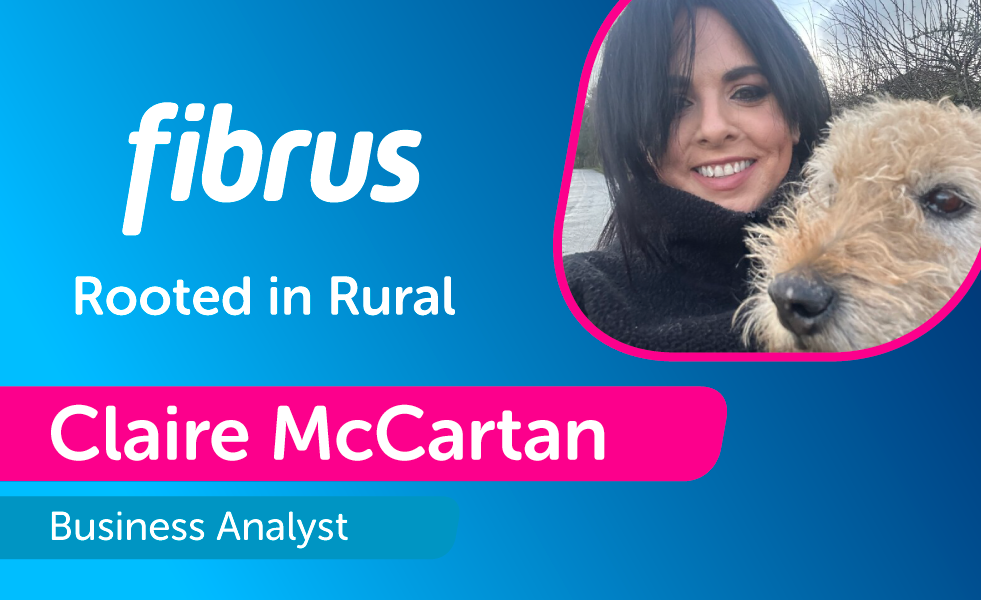
At Fibrus, we’ve always been proud that our company is powered by rural people. Our colleagues are the heart of what we do, and many of them live, work, and thrive in the very communities we serve.
To celebrate this, we’re running a ‘Rooted in Rural’ People Spotlight series, a chance to shine a light on the incredible stories of our rural colleagues who help make Fibrus what it is today.
This month, we’re spotlighting Claire McCartan, Business Analyst for Fibrus Group.
- Where are you from?
I’m from rural Tyrone, an area steeped in history and community, and it’s the combination of natural beauty, community spirit, and quiet rural life that makes it truly special to me. There are countless outdoor and nature-based experiences right on my doorstep- places where it feels safe to let children and pets roam free. And of course, no journey is complete without the friendly nod and raised hand to passing drivers-the famous country salute.
- What makes you most proud of your rural area?
I’m proud of my area as people here look out for one another, and local groups and initiatives play a huge role in bringing everyone together. The local GAA club, for example, isn’t just about sport – it provides social events, youth programs, and health and wellbeing activities that benefit the whole community.
- I understand you live in a primarily rural area, what aspects of that do you find most enjoyable?
Living in a primarily rural area like Tyrone is something I really value. Having spent over 20 years living in Belfast, I’ve experienced both city and rural life, but as I’ve gotten older I’ve come to prefer the slower, calmer pace that rural living offers. I’m surrounded by natural beauty – forests, fields, and clear night skies that and being close to my friends and family makes Tyrone a great place for me to live.
- What’s one thing you think people misunderstand or overlook about rural life?
One thing people often overlook about rural life is the level of commitment it requires. Limited infrastructure, fewer services, and poor public transport mean daily life takes more planning and self-reliance. Being a ‘culchie’ isn’t just about wearing brown boots and checked shirts- it’s about hard work, adaptability, and a strong connection to a place that shapes how you live and work every day
- What challenges have you previously faced working remotely in rural areas, and how have you overcome them?
Hybrid working in a rural area has presented challenges, particularly around travel due to poor public transport. There are limited train services, and bus journeys are slow and limited, making car travel the most practical option – though this carries added risk, as the A5 is one of the most dangerous roads on the island of Ireland. While improvements are needed, opposition to the A5 upgrade has delayed progress. Having full fibre broadband, however, has allowed me to work seamlessly from home, and I manage travel challenges through flexible remote working and careful planning
- Having viewed our Future of Rural Communities report, what aspects of it did you find particularly interesting?
That developers are increasingly seeing opportunities to expand or redevelop rural areas, and that nearly a quarter of all UK businesses are already based in rural locations. The report highlighted how digital infrastructure, AI, and flexible working models could make rural areas even more attractive for both entrepreneurs and remote worker. it reframes rural areas not as isolated or declining, but as full of potential.
- Why do you think it’s important to invest in and connect rural communities?
Investing in and connecting rural communities is crucial because people here have long adapted to fewer large employers by mixing income sources and developing a wide range of skills. This versatility builds resilience, knowledge, and a strong work ethic, which benefits both individuals and local economies. Connecting communities through better digital and transport infrastructure would unlock further opportunities, helping retain young people, support small businesses, and ensure everyone can access essential services while contributing to economic growth.
- What changes or opportunities do you see ahead for rural communities?
I see rural communities increasingly benefiting from flexible and remote working, allowing people to build careers and raise families without needing to live in urban towns. At the same time, improved infrastructure and investment in services could make rural areas more sustainable for families, support small businesses and start-ups, and enhance overall quality of life.
Share article
Recent Articles

Project Stratum reaches halfway mark with full fibre broadband roll out
3 years ago• 2 mins

7 Movies to watch this Halloween
3 years ago• 4 mins

Fibrus awards £55k to help address digital poverty
3 years ago• 2 mins

Why is rural internet slow and how can it be improved?
3 years ago• 4 mins